Cinnamon Story

The Spiralled Saga of Ceylon Cinnamon

The Spiralled Saga of Ceylon Cinnamon

The world’s most storied spice, now in your can of Cinna Buzz.
Before it ever fizzed its way into your hands as a cold, crisp can of Cinna Buzz, Ceylon cinnamon—true cinnamon—was already causing a ruckus in ancient temples, tombs, and trade routes. Known to botanists as Cinnamomum verum or Cinnamomum zeylanicum, this aromatic superstar is native to Sri Lanka, and for thousands of years, its golden curls of bark have whispered tales of wealth, wonder, and world domination (the tasty kind).

Sacred Oils and Spicy Scriptures

Let’s rewind a few thousand years.
Ceylon cinnamon appears in the Bible, where it’s listed as a divine ingredient in the sacred anointing oil in Exodus 30:23. If it was good enough for holy rituals and heavenly perfumes, it’s no wonder it was considered a gift fit for kings (and perhaps a certain trio of wise men). Back then, cinnamon didn’t sit quietly in the spice rack—it carried spiritual significance and serious value.
Let’s rewind a few thousand years.
Ceylon cinnamon appears in the Bible, where it’s listed as a divine ingredient in the sacred anointing oil in Exodus 30:23. If it was good enough for holy rituals and heavenly perfumes, it’s no wonder it was considered a gift fit for kings (and perhaps a certain trio of wise men). Back then, cinnamon didn’t sit quietly in the spice rack—it carried spiritual significance and serious value.

Mummification and Mystery in Ancient Egypt

Mummification and Mystery in Ancient Egypt

Down in the sandy splendour of Ancient Egypt, cinnamon found another role: preserving royalty. Egyptians used it in their mummification process, valuing it for its antiseptic properties and luxurious scent. Pharaohs were embalmed with it, Cleopatra may have worn it, and by the time your soul was heading off to the afterlife, you were basically marinated in cinnamon oil. Eternal rest, but make it fragrant.

Cinnamon and the Roman Ego

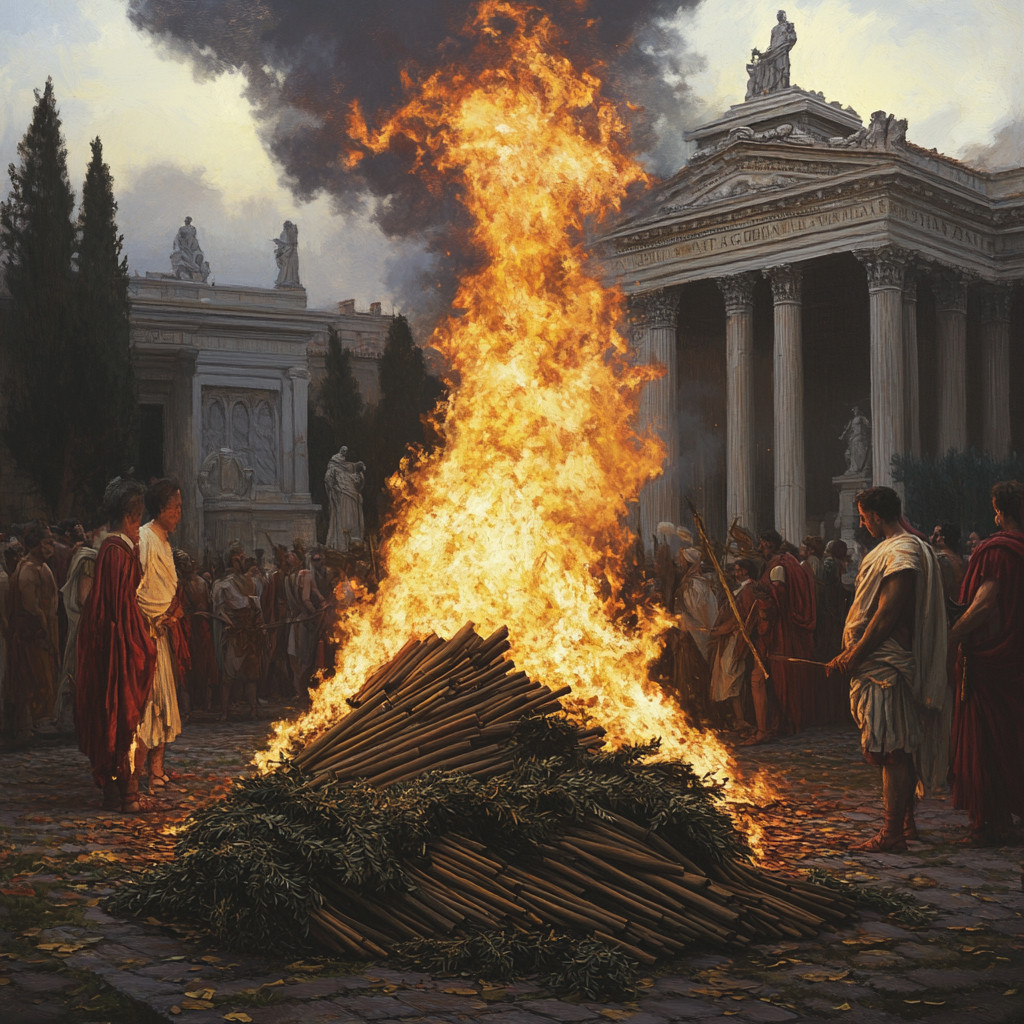
Next came the Romans, with their togas, sandals, and a flair for dramatic gestures. Ceylon cinnamon was rarer than gold, and those who could afford it made sure everyone knew. Take Emperor Nero, who—after the suspicious demise of his wife Poppaea—burned an entire year’s supply of cinnamon at her funeral pyre. Nothing says “I’m sorry” like setting a small fortune on fire.

The Sneaky Phoenicians and the Myth of the Meat Toss

The Sneaky Phoenicians and the Myth of the Meat Toss

Somewhere in the middle of this cinnamon-fuelled drama, the Phoenicians emerged. These savvy seafarers were among the first to trade Ceylon cinnamon across the Mediterranean and Middle East—but they weren’t about to reveal their source. To protect their monopoly, they made up stories: cinnamon grew in bird nests on cliffs, guarded by giant snakes! Locals would toss hunks of meat into the ravines, and eagles would carry up bark stuck to the meat.
Honestly, it was the ancient world’s version of “This is handcrafted by wizards in an undisclosed forest.”

Sinbad and the Cinnamon of Legends

Even Sinbad the Sailor wasn’t immune to cinnamon’s mystique. In One Thousand and One Nights, he tells of cinnamon-filled lands where serpents slithered and riches were only gained by risk-takers with courage and curiosity. It was exotic, elusive, and legendary.
(Just like Cinna Buzz, if you ask us.)
Even Sinbad the Sailor wasn’t immune to cinnamon’s mystique. In One Thousand and One Nights, he tells of cinnamon-filled lands where serpents slithered and riches were only gained by risk-takers with courage and curiosity. It was exotic, elusive, and legendary.
(Just like Cinna Buzz, if you ask us.)

The Island That Spiced the World

The Island That Spiced the World

By now, everyone wanted cinnamon. So naturally, they went straight to the source: Ceylon, the lush, emerald island that would eventually become modern Sri Lanka. Native to this tropical paradise, true cinnamon grew wild and bountiful, and its value was about to shape global history.
In the 1500s, the Portuguese arrived and swiftly took control of the cinnamon trade, taxing and harvesting it like pros (or pirates, depending on your perspective). Then came the Dutch in the 17th century, who turned cinnamon into an industrial-scale operation. And finally, the British took over in the 19th century, cementing Ceylon’s place at the spicy centre of colonial ambition.
Yes, Sri Lanka was literally colonised for its cinnamon. That’s how good this stuff is.

A Spicy Comeback

Today, Ceylon cinnamon is having its moment once more. It’s prized for its delicate, citrusy flavour, its low coumarin content (translation: it’s healthier than cassia), and its papery-soft golden quills that crumble at the slightest touch. It's not just cinnamon—it's the OG.
And in 2022, the European Union finally made it official: Ceylon cinnamon received Geographical Indication (GI) status, meaning only cinnamon grown and processed in Sri Lanka can wear that name. It's the Champagne of spice. The Parmigiano of bark. The Beyoncé of botanicals.
And Now... a Buzz-Worthy Twist
So here we are—centuries later—still obsessed with this magical bark. Only now, instead of embalming pharaohs or bribing emperors, we’ve done the obvious thing: put it in a refreshing, sparkling drink.
Every can of Cinna Buzz contains the soul of a thousand ancient caravans, a pinch of tropical sunshine, and the sweet, spicy legacy of a spice that changed the world.
So next time you crack open a cold one, remember—you’re not just drinking a soda.
You’re sipping on history.
Today, Ceylon cinnamon is having its moment once more. It’s prized for its delicate, citrusy flavour, its low coumarin content (translation: it’s healthier than cassia), and its papery-soft golden quills that crumble at the slightest touch. It's not just cinnamon—it's the OG.
And in 2022, the European Union finally made it official: Ceylon cinnamon received Geographical Indication (GI) status, meaning only cinnamon grown and processed in Sri Lanka can wear that name. It's the Champagne of spice. The Parmigiano of bark. The Beyoncé of botanicals.
And Now... a Buzz-Worthy Twist
So here we are—centuries later—still obsessed with this magical bark. Only now, instead of embalming pharaohs or bribing emperors, we’ve done the obvious thing: put it in a refreshing, sparkling drink.
Every can of Cinna Buzz contains the soul of a thousand ancient caravans, a pinch of tropical sunshine, and the sweet, spicy legacy of a spice that changed the world.
So next time you crack open a cold one, remember—you’re not just drinking a soda.
You’re sipping on history.